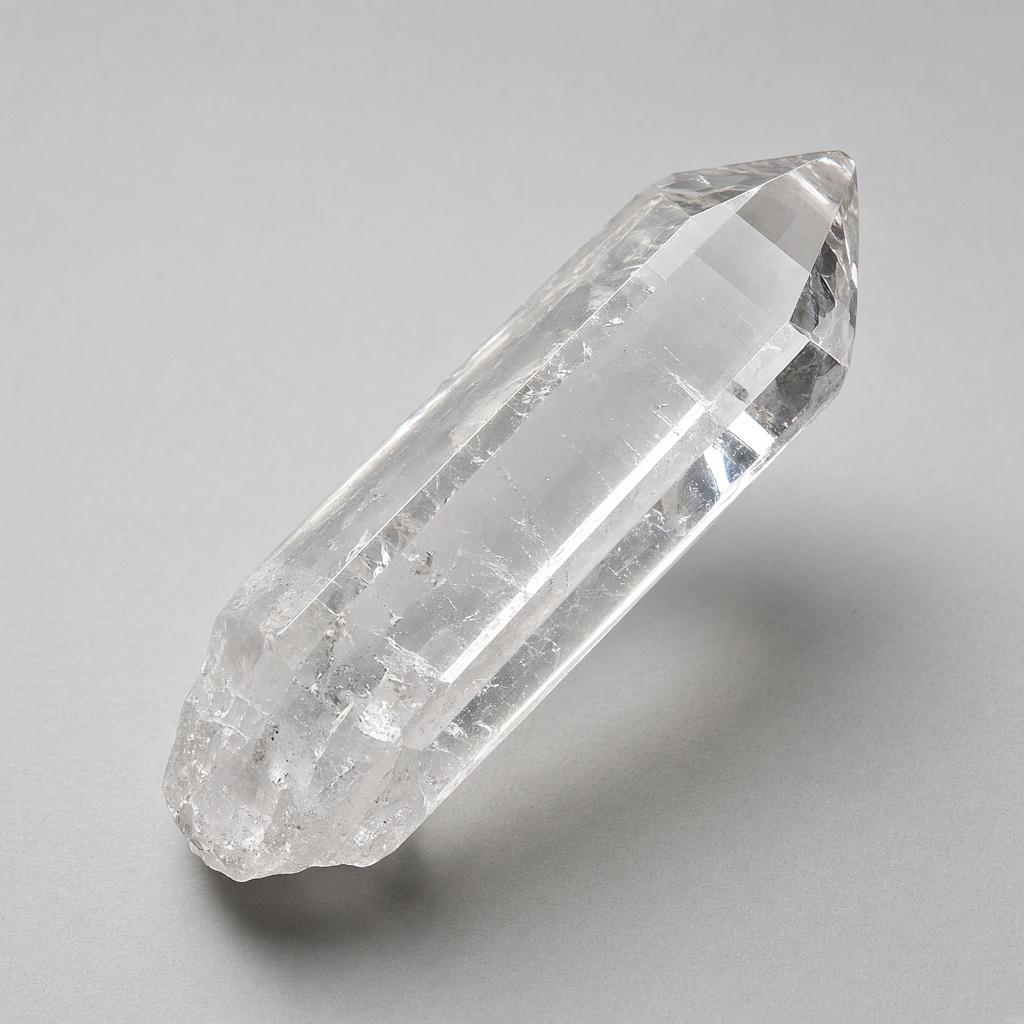
Field checks
Quartz is the mineral people reach for whenever a stone looks clear. The reach is useful only if the tests follow. A six-sided point is a clue. A tumbled white pebble is the same mineral with the clue removed. Start with what the stone refuses to do.
Hardness
Quartz is 7. A steel nail slides on a fresh face. A groove you can feel means a softer mineral. Calcite is about 3 and a copper coin scratches it. Feldspar is about 6 and may take a nail on a corner while quartz does not. Glass is about 5 to 5.5. A sharp quartz edge scratches window glass, and the pane does not scratch back. Spare the faces of a crystal you want to keep, and use a chip that is already there.
Streak
Unglazed ceramic usually shows only a white scrape of the tile. Quartz does not give a colored streak that names the variety. Purple powder means dye, which is an amethyst-fake problem, not a quartz property. A yellow metallic streak means you are streaking a metal grain, not the quartz host.
Acid
Vinegar on a scratch stays quiet on quartz. Bubbles mean carbonate. That single drop retires more false quartz names than any photo of a sparkle. Wipe it off. Calcite will etch if you leave the drop sitting. You do not need a stronger acid to finish this identification.
Magnet
Quartz does not stick to a magnet. In a mixed rock, test the glassy grain, not the dark neighbor. Granite contains quartz as hard glassy grains locked with feldspar and mica. The rock name and the mineral name are both allowed, and they are not the same sentence. A magnet that grabs the whole cobble has found iron minerals in the rock, not a magnetic variety of quartz.
The break should be curved, like thick glass, without the flat cleavage feldspar shows in two directions near a right angle and without the tilted rhombs of calcite. If you can build a box from the shiny faces, you are probably not holding quartz. Chalcedony and agate are quartz in tiny crystals. They pass these tests and then get a habit word, not a new hardness.
How it differs from lookalikes
| Lookalike | How to tell it from quartz |
|---|---|
| Calcite | Hardness about 3, rhomb cleavage, vinegar fizz. Quartz does none of the three. |
| Feldspar | Two cleavages near a right angle, hardness near 6. A nail may mark it. Quartz breaks in curves. |
| Glass | Bubbles, a mold seam, or edges that look poured. Hardness is lower if you can test a chip. |
| Amethyst | Not a lookalike. It is purple quartz. Same tests, then the color variety. |
Purple points are amethyst. Yellow points may be natural citrine or heated amethyst. Both remain quartz. Say the species, then the color story. A brassy cube sitting on the quartz is pyrite. The streak of that cube is a different page, pyrite vs gold, and it does not change the quartz underneath.
When a photo gets it wrong
One glassy face fills the frame and feldspar cleavage looks identical. You need a second angle to see whether another flat plane meets the first. A coin in the frame keeps the face from looking larger than it is. Wet quartz and wet calcite both throw a white highlight. Dry the specimen before you name the shine.
Glass points and marbles carry bubbles and seams that a flash erases. Turn the piece at a window. Bubbles stay round. Quartz fractures are curved sheets. A nail groove ends the argument if you are allowed to touch a chip.
A white vein across a cobble is not automatically quartz. The filling might be calcite or feldspar. Crop to the filling and record whether the nail and the vinegar drop were used on that white material. The dark host can be a different rock. Color variety photos fail the same way: milky, clear, smoky, and purple are one mineral, and a hue swatch is not a test. The step-by-step version is how to identify quartz. This entry is the mineral those steps are about.
Conclusion
Keep quartz when the nail slides, the break is curved, the streak is colorless, vinegar is quiet, and the magnet is bored. Retire it when a coin scratches, when bubbles rise, or when cleavage faces meet in flat pairs. A crystal point supports the name and is not required. Agate and chalcedony stay inside quartz and get a texture description after the tests pass.
Order the checks the same way every time so a pretty face cannot skip one. Nail first, then the shape of the break, then vinegar, then the magnet, and only then the color word. A crystal that fails the nail is not “quartz with a soft spot.” It is a different mineral, or glass, or a coating you have not scraped through. Repeat the nail on a second corner if the first one was dirty. Dirt grooves under a point and looks like a scratch in the mineral. Wipe the metal smear off before you decide the stone itself yielded.
Photograph the chip you tested, not only the prettiest face. The mineral identifier reads that photo on the same page. If the question is specifically purple, go to amethyst and to the real-versus-fake checks before you pay for a variety. If the question is the procedure in order, use the how-to page and then come back here for the mineral name you are allowed to keep.
Confirm with a photo
Upload a clear photo on IdentifyStone. The name stays on the same page with the traits that would keep or replace it.
Related entries
FAQ
- Is clear quartz the same mineral as amethyst?
- Yes. Amethyst is purple quartz. Name the mineral first, then the color variety. Hardness and fracture stay the same.
- Why does my quartz scratch with a coin?
- Real quartz should not. A coin scratch usually means calcite, glass, or a coating. Retest a fresh corner before you keep the name.
- Does quartz fizz in vinegar?
- No. Fizzing points to calcite or another carbonate. Wipe the drop and drop the quartz label until hardness agrees.