Crystal identifier for the piece in your hand
Crystal identification names the mineral and the shape it grew in. A point, a cluster, a geode, and a tumbled stone are not the same clue, even when the color matches. Start from the photo, then check the form against hardness.
Upload crystal photos
Clear, well-lit images help the identification. Add up to 4 photos of the same piece.
Crystal identification starts with the shape
In a shop, crystal often means a single mineral that grew with flat faces, or a polished piece sold for a collection. In mineralogy the word is stricter: a crystal is a solid whose atoms repeat in a pattern, whether or not the outside still shows that pattern. Crystal identification has to notice which meaning the photo is using. A sparkling point and a frosted tumbled stone can be the same species.
Write down the habit before you accept a trade name. A point is a prism that ends in faces. A cluster is many crystals grown together. A geode is a rounded rock lined with crystals. A tumbled stone had its faces worn off in a drum, so shape will not name it. If you skip that note, crystal identification collapses into color, and color is shared by dozens of species.
Crystals people ask a crystal identifier to name
Clear quartz grows a six-sided prism and often a six-sided point. A steel nail should slide on it. Amethyst is purple quartz, and the color sits in zones. Citrine is yellow quartz. A large share of the citrine for sale is amethyst that was heated until the purple left, so a crystal identifier should not treat the color as proof of a separate find. Smoky quartz is the brown to gray member of the same family.
Calcite is softer, breaks into tilted boxes, and fizzes when vinegar sits on a fresh scratch. Fluorite grows cubes, cleaves into octahedrons, and is often purple or green at a hardness near 4, so a steel nail scratches it while quartz resists. Selenite is a clear variety of gypsum. A fingernail scratches it, and the sheets look pearly. Pyrite grows brassy cubes and leaves a green-black streak. It is a crystal people mistake for gold, and the streak ends that mistake.
Trade names that hide the mineral
Labels travel faster than species names. A point sold as a generator, a cathedral, or a twin may still be ordinary quartz. Aura and angel coatings are metal films on quartz, not new minerals. A geode sold as an amethyst cathedral is a lining of quartz crystals in a volcanic or sedimentary shell. Crystal identification should recover the mineral name and then keep the shop label as a description of the shape, not as the species.
Dye and heat are common and not always disclosed. A vivid uniform color that pools in cracks is a warning. Heat that turned amethyst yellow does not make the stone a different mineral, but it does change what a seller may claim about the source. The photo can show the color zoning. It cannot show the temperature history. Say what you can see, and leave the treatment question open.
Checks that finish a crystal identification
Match three things. First, the form: prism, cube, tilted box, sheet, or no faces left. Second, a hardness bracket using a fingernail, a copper coin, window glass, and a steel nail, and only on a spot you can spare. Third, luster on a clean face: glassy quartz, pearly selenite, metallic pyrite. If two of the three disagree with the label, the label is wrong.
A tumbled stone has already lost the form, so hardness and streak do more of the work. A geode needs two names: the lining, and the dull shell around it. Photograph the lining so it fills the frame, then photograph a broken edge of the shell. Crystal identification of only the sparkle will miss a calcite lining inside a rock you thought was quartz, or the reverse.
Three judgments a crystal identifier gets wrong
A shop label is a shape, not a species. Cathedral, generator, twin, and aura describe how a point was sold or coated. Aura and angel quartz are metal films on quartz. The mineral is still quartz. Crystal identification should say the species first and keep the trade name as a note about the coating or the form.
Yellow does not prove citrine. A large share of yellow points are amethyst heated until the purple left. Purple crumbs at the base are a hint of that heat, not a second mineral. The crystal identifier answer is quartz, then the color, and the treatment stays unknown unless the seller documents it.
The lining is not the rock. A geode can hold quartz points in a dull shell, or calcite points in a shell someone calls amethyst because the photo was dark. Name the crystals you can see, then name the shell from a broken edge. One sparkly frame is not both answers.
Crystal forms worth matching first
Form before color. A point, a cluster, a cube, and a sheet are different identification problems even when the hue matches.
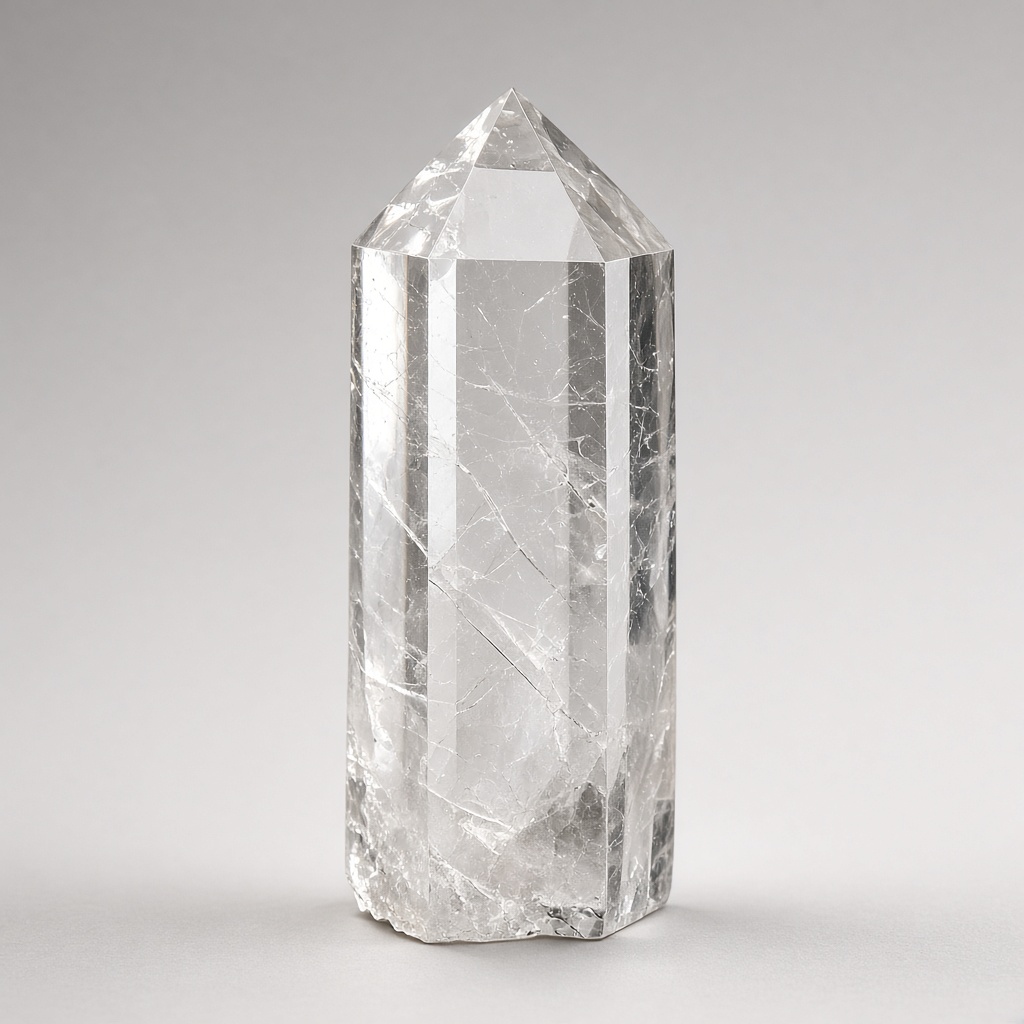
Clear quartz
Six-sided prism ending in a point. Hardness near 7.
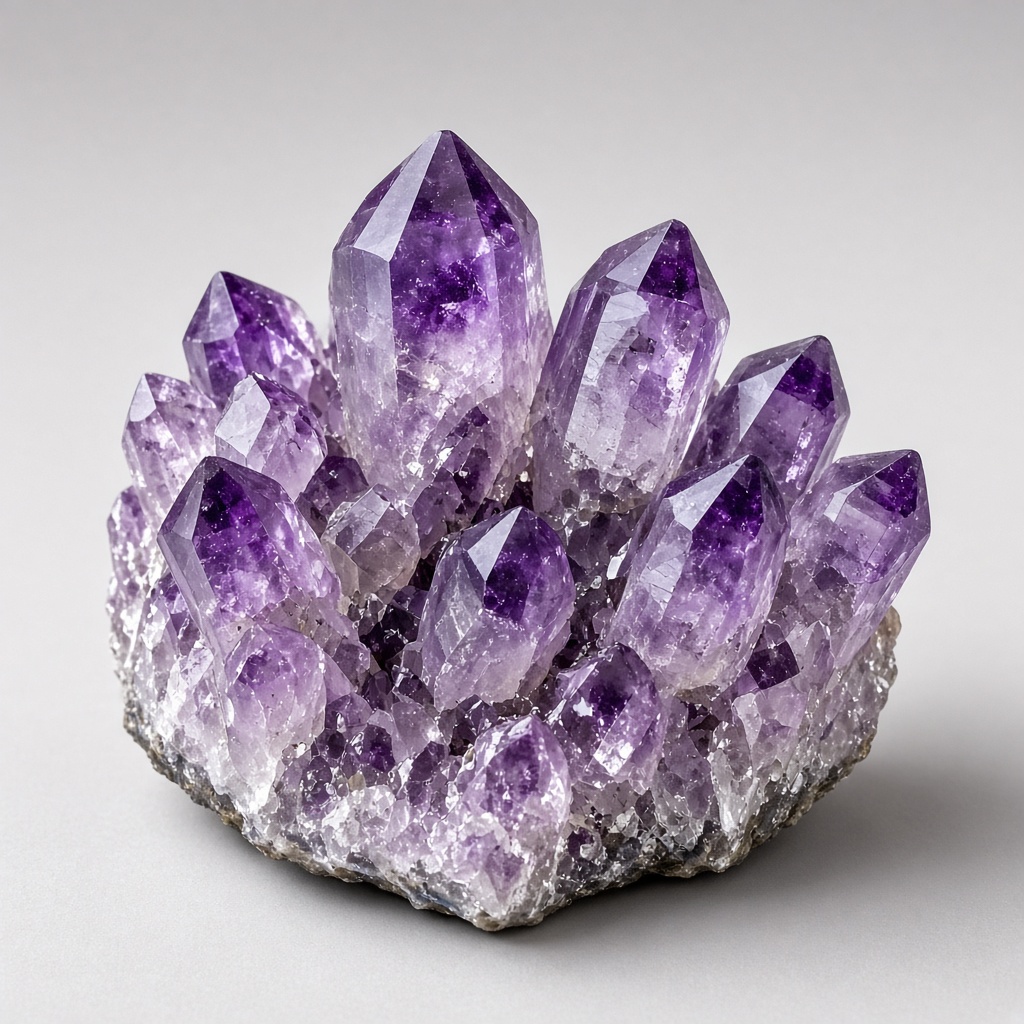
Amethyst
Purple quartz grown as a cluster or geode lining.
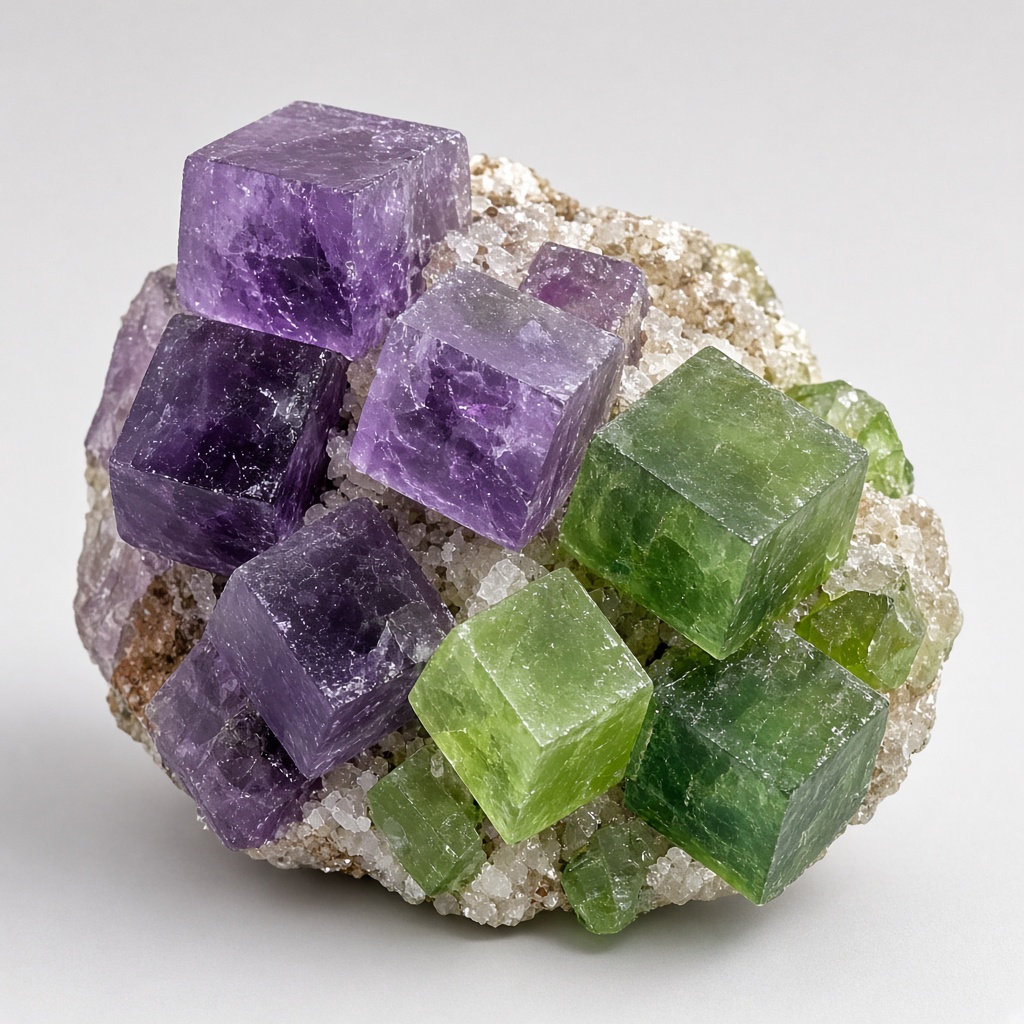
Fluorite
Cubes and octahedral cleavage. Softer than quartz.
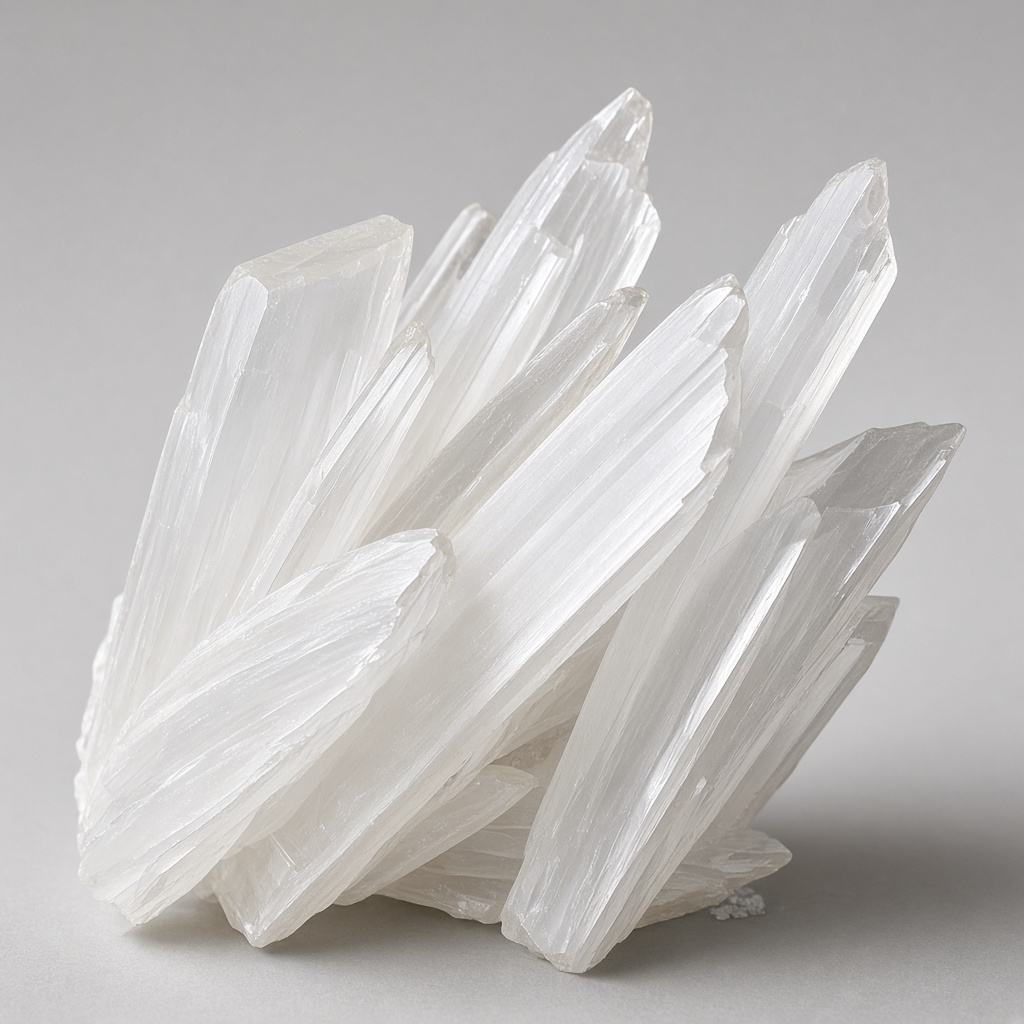
Selenite
Clear gypsum. A fingernail can scratch the sheets.
Questions people ask next
- Is a crystal identifier the same as a mineral identifier?
- They overlap. Crystal identification cares about the shape you can see: a point, a cluster, a cube, a geode lining. A mineral identifier cares about the species, whether or not the crystal faces survived. Quartz is the answer to both when the prism is intact. A tumbled quartz pebble is still quartz, but it is a poor crystal-form question and a fair mineral question.
- Why does my citrine look like heated amethyst?
- Because much of it is. Natural citrine is uncommon, and heating amethyst drives the purple toward yellow or orange. The mineral is still quartz. A crystal identifier should say quartz first and then describe the color. Breadcrumbs of purple at the base of a yellow point are a hint of heat treatment, not a second species.
- Can I identify a crystal inside a geode from one photo?
- You can name the lining if the photo shows the crystal faces, not just a dark hole. Quartz linings are glassy and often six-sided. Calcite linings are blockier and softer. Take a second photo with a coin in the frame so the crystal size is obvious. The outer shell is a rock, and it may not match the mineral inside.
- Will a crystal identification tell me if it is safe to put in water?
- The name is the start of that answer, not the whole of it. Selenite softens and clouds in water. Pyrite can break down and stain. Quartz tolerates a rinse. A coating, a drill hole, or a glue join can fail even when the mineral would survive. Confirm the species, then look up that species before you soak a piece you care about.
Name the rock or stone first
The home page answers what type of rock is this, what stone is this, and what is this stone. Use it when the piece might be a rock, a mineral, or both.