Fossil identifier for a shell, bone, or print
A fossil identifier names evidence of past life in a photo: a shell, a bone, a leaf, a coral, or a print. The shape has to be organized, and the rock around it has to be part of the note. Minerals that only look alive are the usual miss.
Upload fossil photos
Clear, well-lit images help the identification. Add up to 4 photos of the same piece.
What a fossil identifier is looking at
A fossil is evidence of past life preserved in rock. A shell, a bone, a tooth, a leaf, and a piece of wood are body fossils: parts of the organism. A track, a burrow, and a bite mark are trace fossils: something the organism did. A fossil identifier has to choose that split first, because a coiled shell and a coiled track are not the same find and do not get the same name.
The original material often left. Permineralization fills pores with minerals. Replacement swaps the shell or bone for calcite, silica, or pyrite and keeps the shape. A mold is the empty impression. A cast is the mud or mineral that filled the mold. You can hold a perfect shell shape that is now quartz, and it is still a fossil. It is not a quartz crystal that happens to be curved.
Shapes worth naming before the rare groups
Ammonites are coiled and divided into chambers. A sliced one shows the walls as curved lines. Brachiopod and clam shells are simpler valves, and the symmetry differs: a brachiopod is mirror-left-and-right across the shell, while many clams are mirror images of two valves. Coral shows repeated cups or a honeycomb of holes. A plant fossil may be a carbon film with veins, or a woody texture replaced by mineral.
Bones and teeth keep a porous interior and a denser outside when the replacement is gentle. A tooth shape with a root is a fair first call. A smooth brown pebble is not. Crinoid stems look like stacked washers or stars in cross section. Trilobite fragments show a segmented shield, and a whole one is rarer than a single rib. Photograph the repeating part so it fills the frame. A fossil identifier cannot use a shape it cannot see.
Rocks that pretend to be fossils
Dendrites are the classic fake plant. They branch like a fern across a crack, but they are manganese or iron oxides, flat, and they have no veins, midrib, or carbon film. A concretion is a rounded mineral mass that grew in the sediment. Some concretions formed around a fossil and will show a shell if you break them. Many are only calcite or iron stone, and breaking them destroys the only specimen you had. Do not split one unless you can accept the loss.
Tool marks, drill cores, and weathered mineral veins also get uploaded as bones. A bone has a grain and, when fresh enough, a porous core. A vein has straight or jagged walls that follow a crack, and the material matches the minerals in the host rock. If the object is the same stuff as the rock around it and has no organized shape, it is a rock feature. Send that photo to the stone identifier instead of forcing a fossil name.
What to record with the photo
Note the rock the fossil sits in. Limestone, shale, and sandstone preserve different things, and a shell in limestone is a different story from a bone in river gravel that may have been carried. Include a coin for scale. Photograph the fossil, then the rock a hand-width away, so the host is not a blur. Wetting a dull surface can make a shell outline show up. Say that you wet it, because a wet mineral and a dry mineral also look different.
Skip household acid on anything you hope to keep. Vinegar attacks calcite, and many shells and the limestone around them are calcite. A fizz tells you the mineral. It also eats the fossil. Hardness and streak belong to the mineral that replaced the organism, not to the animal. Use them to describe the replacement, then name the shape with the fossil identifier, and name the host rock on the home page if the stone itself is the question.
Three judgments a fossil identifier gets wrong
A branch on a crack is often a dendrite. Manganese and iron oxides paint fern-like trees with no midrib, no veins, and no carbon film. A leaf fossil has an organized margin or a woody grain. If the pattern is only a stain, it is a mineral, and the fossil name should stop.
A round brown stone is not an egg and not a bone. Many concretions are calcite or iron stone that grew in the sediment. Some hide a shell, and splitting them is permanent. Photograph the outside and any crack that already shows a pattern before you break anything. A smooth pebble with no pores is a rock.
Grooves from a tool, a drill, and a mineral vein get uploaded as bones. A bone has a grain and, when replacement is gentle, a porous core. A vein follows a crack and matches the minerals beside it. If the object is the same material as the host and has no organized shape, it is a rock feature.
Fossil shapes to recognize in a photo
Look for organized repetition: chambers, cups, segments, or stacked rings. A stain that only branches on a crack is often a mineral dendrite instead.
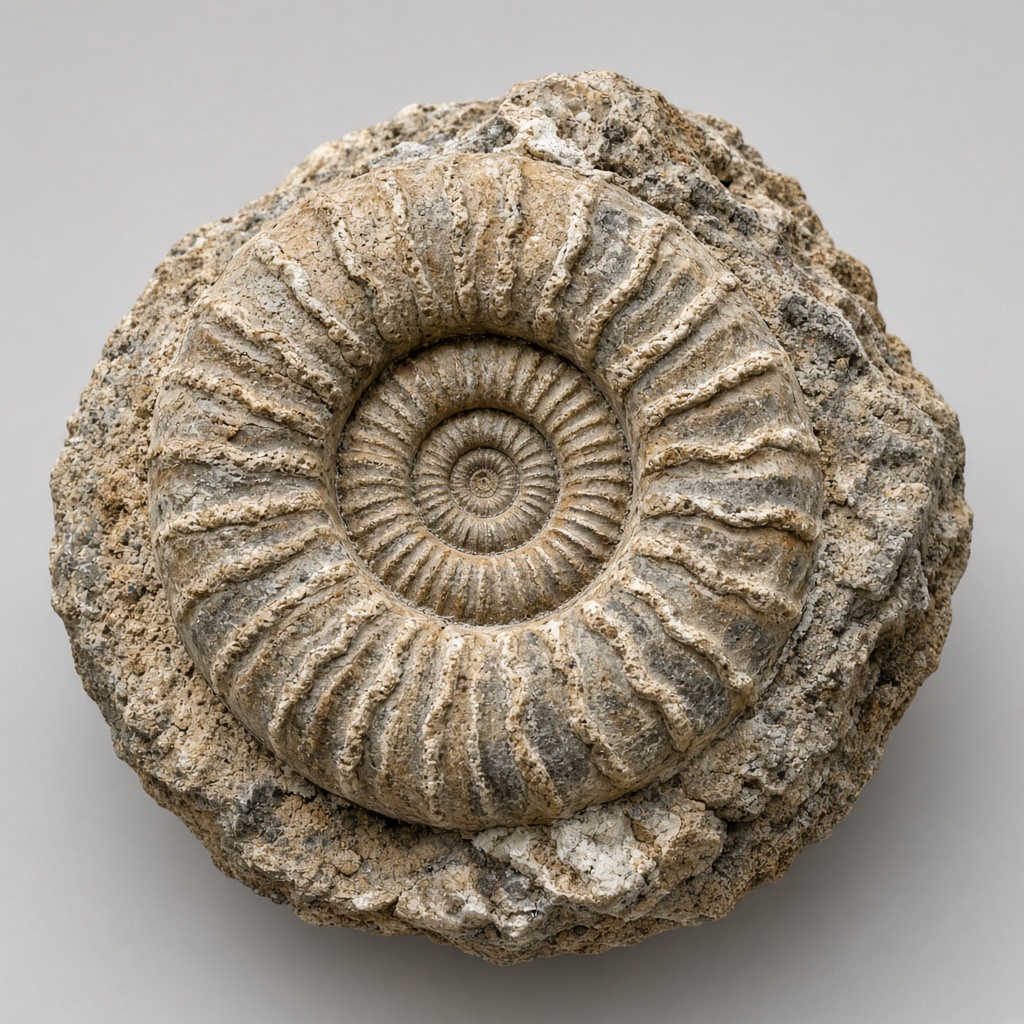
Ammonite
Coiled chambers. A cut face shows the walls as curved lines.
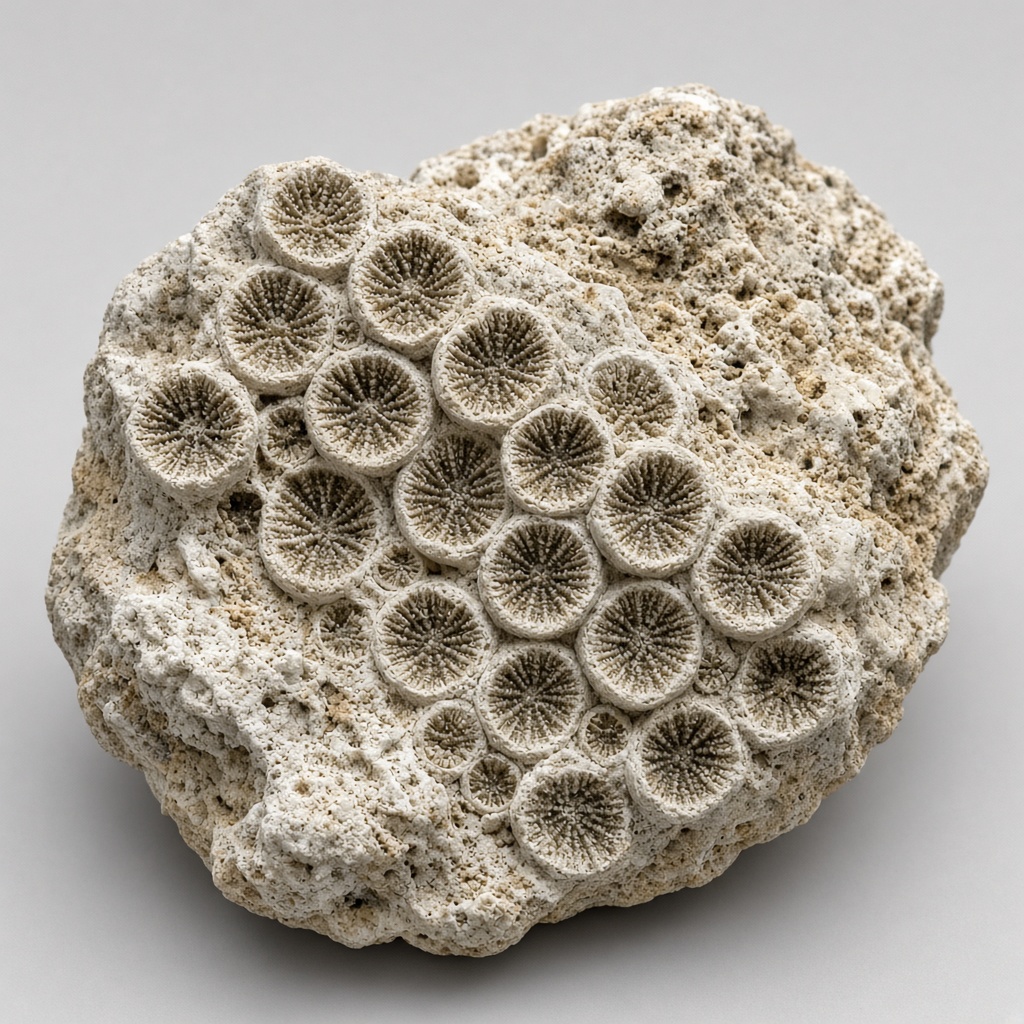
Coral
Repeated cups or a honeycomb of holes in the rock.
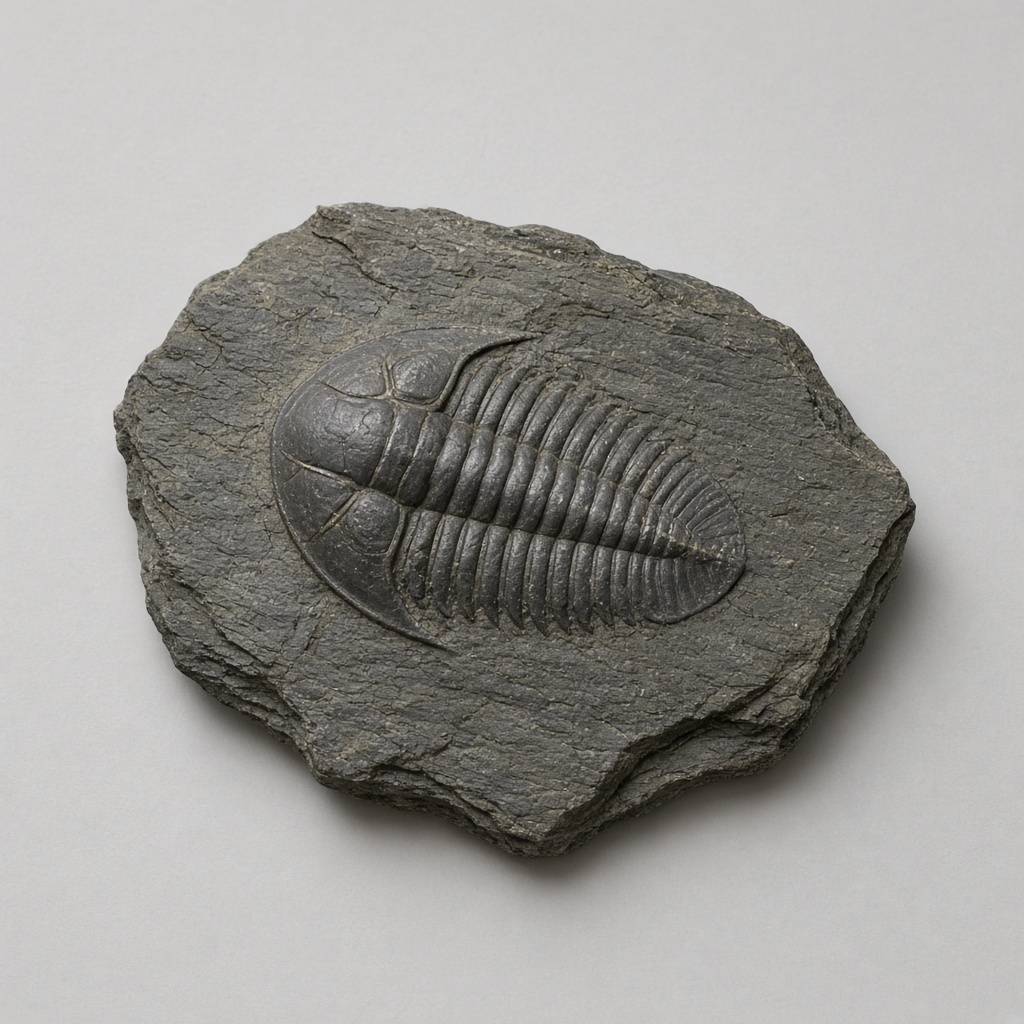
Trilobite
A segmented shield. Fragments are more common than whole animals.
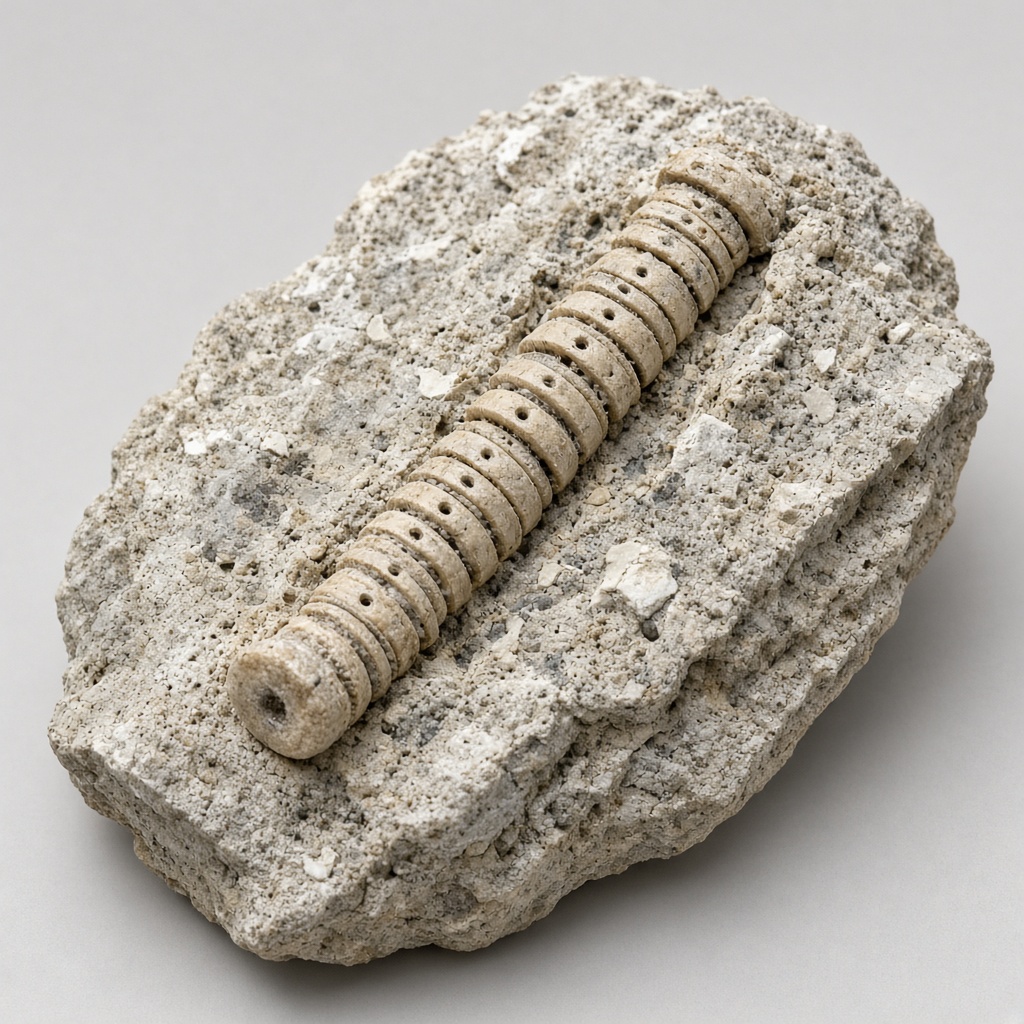
Crinoid
Stem pieces look like stacked washers or stars in cross section.
Questions people ask next
- Can a photo prove this is a fossil?
- A clear photo can show an organized shape: chambers, segments, veins, or a porous bone interior. That is strong evidence. A blurry curve in a concretion is not. Dendrites branch like plants and are minerals on a crack. Take a close photo of the repeating detail and a second photo that shows the rock around it. If neither shows order, keep the name as a maybe.
- Is a fossil a mineral or a rock?
- It is evidence of life, kept in rock, and often replaced by a mineral. The shape is the fossil. The calcite, silica, or pyrite is the mineral that took its place. The limestone or shale around it is the rock. A fossil identifier names the life trace. The home page names the rock when that is the other half of the question.
- Should I break a round rock to look for a fossil?
- Only if you can afford to be wrong. Some concretions hide a shell or a leaf, and many hide nothing. The break is permanent. Photograph the outside first, including any crack that already shows a pattern. If a natural crack has opened, look there before you make a new one. A fossil identifier can work from the exposed face.
- Does the fossil identifier date the specimen?
- No. A name such as ammonite or coral narrows the kind of organism and sometimes the broad part of geologic time that group lived in. It does not date your piece to a year or even to a single rock layer. Local bedrock, and a look at the host rock, do more of that work. The photo names the shape. The map and the rock name come next.
Name the rock or stone first
The home page answers what type of rock is this, what stone is this, and what is this stone. Use it when the piece might be a rock, a mineral, or both.