Field checks
People say quartz whenever a stone is clear, white, or glassy. That habit starts the right search and ends the wrong name. Quartz has a short list of things it will not do: it will not scratch under a steel nail, it will not fizz, it will not stick to a magnet, and it will not cleave into flat boxes. Run those refusals before you trust a crystal shape, because glass and broken calcite can both look like a point in a bad photo.
Hardness
Quartz is 7. A steel nail should slide on a fresh face and leave, at most, a metal streak you can wipe off. If the nail digs a white groove into the stone, it is softer than quartz. Calcite is about 3 and a copper coin marks it. Feldspar is about 6, so a nail may bite a corner while quartz still refuses. Glass sits near 5 to 5.5. The practical pair of checks: a sharp quartz edge scratches window glass, and the glass pane does not scratch the quartz. Do not scratch a cut gem or a point you want to keep clean. Use an edge that is already chipped.
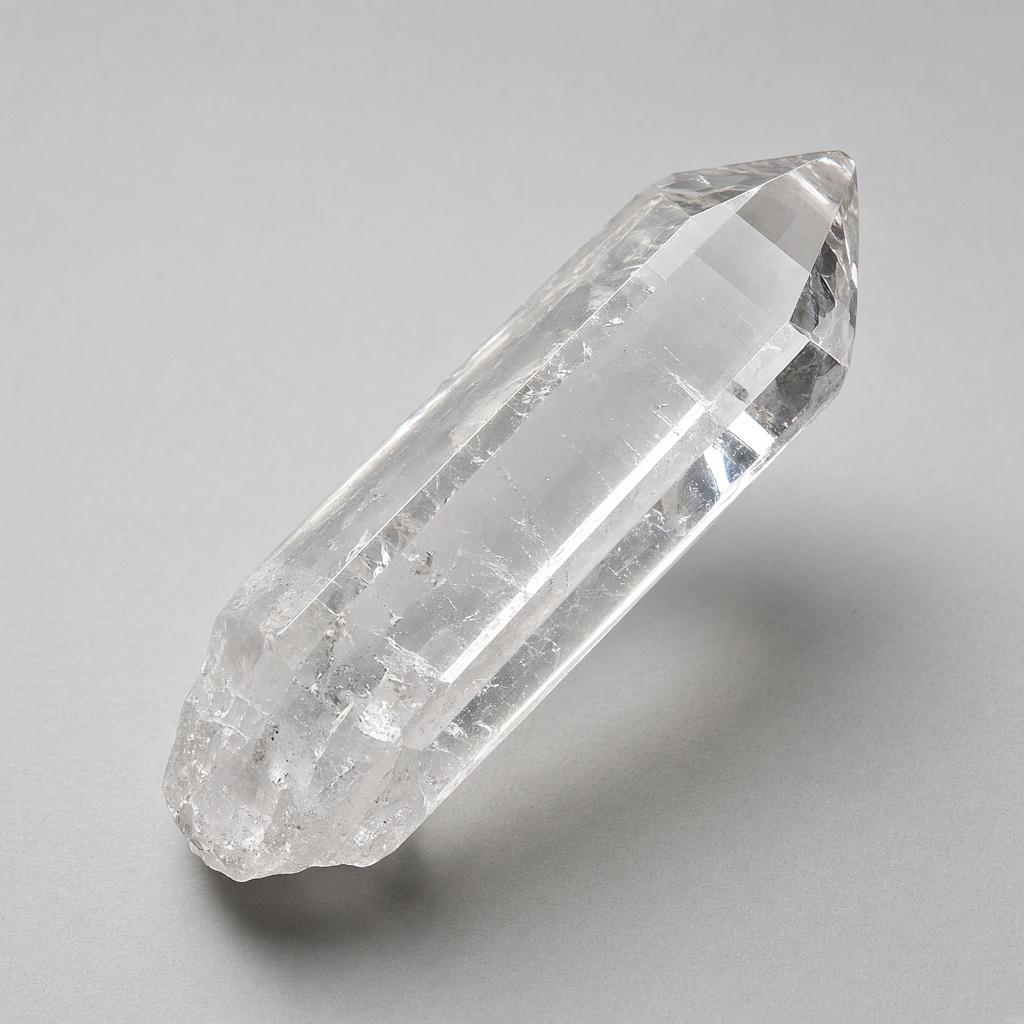
A six-sided prism with a pointed tip is the habit everyone recognizes, and it is worth recording when the faces are really there. Tumbled stones and vein fillings have lost that shape. Hardness still works on them. Clusters and geode linings are the same mineral. Purple points are amethyst, which is quartz. The color does not lower the hardness.
Streak
On unglazed ceramic, quartz usually leaves nothing but a white scrape of the tile. There is no colored powder that identifies the variety. A purple streak means the color was dye or paint, which matters when you are asking how to tell if amethyst is real. A yellow metallic streak is not quartz at all. That streak belongs to a metal, and a brassy cube in the same sample is a pyrite vs gold question sitting beside the quartz, not inside it.
Acid
One drop of vinegar on a scratch. Quartz does not fizz. Calcite does, often briskly, and the fizz is the fastest way to retire a quartz name on a soft pale crystal. Limestone made of calcite grains can fizz even when the hand sample looks sandy or sugary. Wipe the drop. If you see flat cleavage faces and you also see bubbles, you do not need a third test to reject quartz. If there are no bubbles and the nail still slides, acid has done its job by staying quiet. Stronger acids are unnecessary and are not a field method here.
Magnet
Quartz is not magnetic. A pull means you tested a different grain, a steel pin, or a rock full of magnetite with a quartz pebble glued in your memory to the wrong speck. Move the magnet grain by grain if the sample is a mix. In granite, the glassy grains that ignore both the nail and the magnet are the quartz, and the dark flakes may be mica or another mineral. Name the grain you tested, not the whole rock, when the question was quartz.
Fracture is the look that belongs with these tests. Quartz breaks in smooth curves, like thick glass, and it does not offer the two flat cleavage directions feldspar shows near a right angle. If you can set two shiny planes against each other like the walls of a box, think feldspar or calcite before you think quartz. Calcite’s boxes are tilted rhombs, not right angles, and they fail the hardness and acid tests above.
How they differ
| Check | Quartz | Lookalike that fails it |
|---|---|---|
| Hardness | 7. A steel nail slides. | Calcite near 3, glass near 5.5, feldspar near 6. |
| Break | Curved fracture. No true cleavage. | Feldspar and calcite break on flat cleavage planes. |
| Streak | White or none. | A colored smear means dye, or you are not streaking quartz. |
| Vinegar | No fizz. | Calcite and limestone fizz. |
| Magnet | No pull. | A pull is a different grain or a metal finding. |
| Inside a clear piece | May show natural faces or a curved break. | Glass may show a bubble, a mold seam, or rounded edges. |
When a photo gets it wrong
A single sparkling face fills the frame and the caption says quartz. Feldspar cleavage is also glassy. Without a second angle you cannot see whether a second flat plane meets the first near a right angle. Ask for that second angle, and for a coin so you can judge the size of the faces. One shiny plane is not an identification.
Glass marbles and molded points are the next miss. Round bubbles, a seam, and edges that look poured rather than grown all survive in a careful photo and disappear in a flash shot. Tilt the piece at a window. Bubbles stay round when the stone turns. Fractures in quartz are curved sheets, not spheres. If you cannot tell, hardness on a chip you can spare ends it. A nail groove means it is not quartz, whether or not you ever find the bubble.
Wet quartz and wet calcite both darken and both throw a white highlight. Dry them. Then remember that color is the least useful frame. Milky quartz, clear quartz, purple amethyst, and yellow quartz that may be heated amethyst are one mineral. The amethyst page is the color variety. This page is the test list that all of those colors still have to pass. A photo that only shows hue has not started the list.
Conclusion
Identify quartz when a nail slides, the break is curved rather than a flat cleavage box, the streak is colorless, vinegar does not fizz, and a magnet is indifferent. A crystal point supports the name and is not required. A fizz or a deep nail groove retires it. A right-angle cleavage pair points to feldspar. Bubbles and a mold seam point to glass.
Shoot the fresh edge and, when you have it, the tile after the streak, with a coin for scale. The quartz entry is the short mineral reference. This page is the procedure. If the purple is the actual question, use the amethyst checks before you pay for a variety name. When two tests disagree, the mineral identifier can read the photo you took for those tests and leave the candidates on the same page.
Confirm with a photo
Upload a clear photo on IdentifyStone. The name stays on the same page with the traits that would keep or replace it.
Related entries
FAQ
- Is amethyst a different mineral from quartz?
- No. Amethyst is purple quartz. Identify the mineral as quartz first, then describe the color. The hardness and fracture do not change with the purple.
- Why did my clear stone scratch with a coin?
- Quartz should not. A coin scratch usually means calcite, or a coating, or glass soft enough to mark. Retest a fresh corner before you keep the quartz name.
- Does quartz fizz in vinegar?
- No. Bubbles mean a carbonate such as calcite. Wipe the drop and treat the quartz label as wrong until hardness agrees with the acid test.