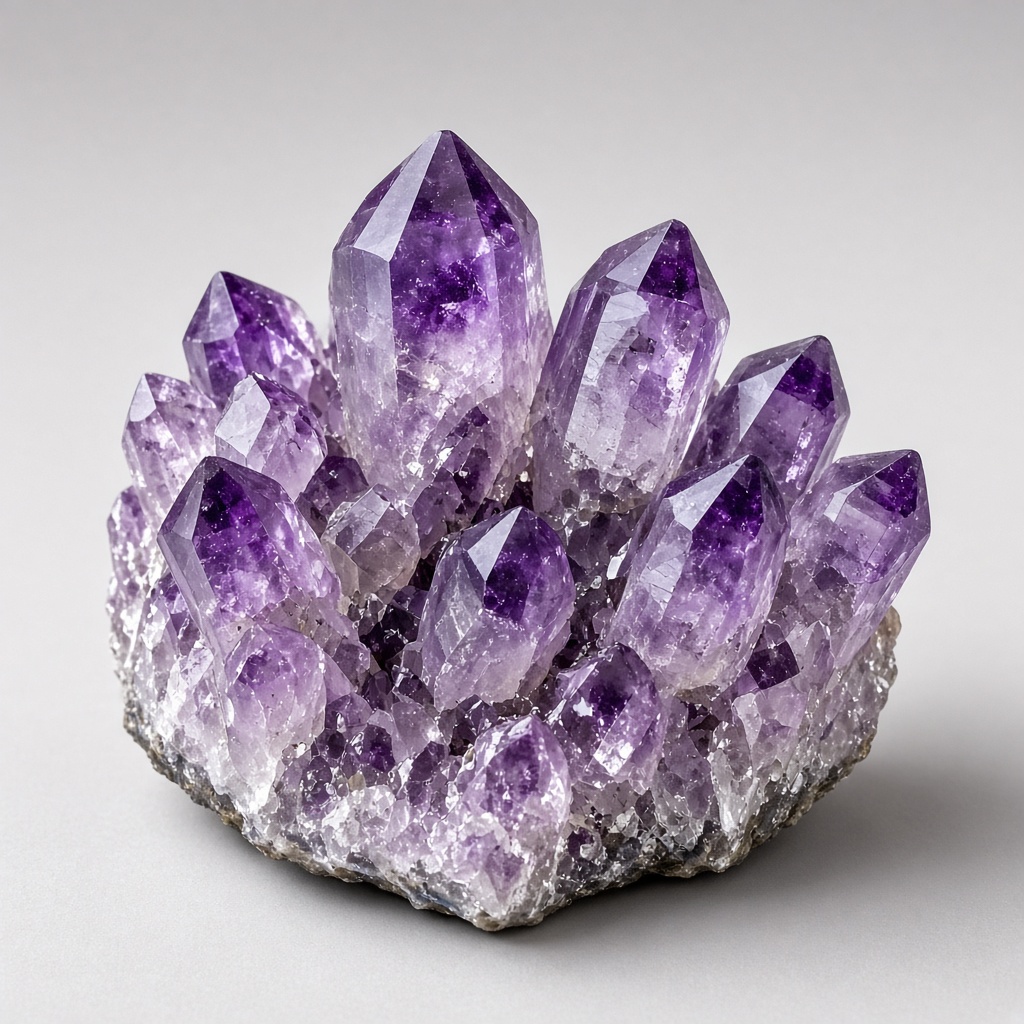
Field checks
Amethyst is not a separate mineral from quartz. The purple is a color variety. A real piece should pass the same tests as colorless quartz, and the color should look like it grew with the crystal. Start with a point, a broken base, or a dull spot on a tumbled stone. Do not begin with the shop name on the label.
Hardness
Quartz, including amethyst, is about 7. A steel nail should slide on a fresh face you can spare. If the nail digs a groove, the purple stone is softer than quartz. Fluorite is often purple and sits near 4, so the nail scratches it easily and the powder is pale. Glass is nearer 5 to 5.5. A steel point may mark some glass and should not mark amethyst. The safer comparison, when you have a piece of known glass, is the other way: a sharp amethyst edge scratches window glass, and the glass does not scratch the amethyst.
Skip this test on a cut gem, a polished point you want to keep unmarked, or anything set in jewelry you cannot afford to chip. Photograph the junction of two facets instead. Real stone facets meet in a crisp line. Molded glass often shows a soft seam or rounded edge where the mold closed.
Streak
Rub a broken edge on unglazed ceramic. Amethyst does not leave a purple streak. You get a white scrape, or no powder at all, because the tile is softer than the quartz and the color does not come off as a pigment. A purple mark on the tile means dye, paint, or a soft colored coating, not the mineral itself. Wipe the stone afterward so you are not judging a dirty face.
Acid
One drop of household vinegar on a fresh scratch is enough. Real amethyst does not fizz. Bubbles mean a carbonate. Purple-dyed calcite is a common stand-in: it is soft, it cleaves into tilted boxes, and the vinegar drop foams. Wipe the acid off immediately. Vinegar eats calcite and will scar a piece you meant only to test. Do not use stronger acids. They are not needed once hardness and the vinegar drop agree.
Magnet
Amethyst is not magnetic. A fridge magnet that grabs the stone has found iron mineral, a steel pin in the setting, or a different rock sold under a purple light. Take the stone off any metal before you judge the pull. “Magnetic” purple beads are a product claim, not a property of quartz. If the magnet sticks to the bead itself, do not keep the amethyst name.
Color zoning is the habit check that sits beside these four. Natural purple often deepens toward the tip or sits in bands you can follow through a broken base. Dye collects in cracks and along the surface, and it may rub onto a wet cloth. A uniform neon purple with no zones, on a soft stone, is not a field amethyst until hardness says otherwise.
How they differ
| Check | Real amethyst | Common stand-in |
|---|---|---|
| Hardness | About 7. A steel nail slides. | Fluorite near 4, calcite near 3, glass near 5.5. A nail can mark them. |
| Streak | White or none. Not purple. | Dye or paint can leave a colored smear. |
| Vinegar | No fizz. | Dyed calcite fizzes. Glass and fluorite do not. |
| Magnet | No pull. | A pull is a different material or a metal finding. |
| Inside the color | Zones or bands that follow the crystal. | Dye in cracks, bubbles in glass, or a mold seam. |
Glass can be the same hardness neighborhood as a poor test, so use two checks. Bubbles frozen inside the piece, a mold line, and color that is only a surface film all point away from quartz even when a hurried scratch felt “hard.” Feldspar is another pale mineral in the same rocks, but it is not the purple crystal in a typical geode. It cleaves in flat directions near a right angle and sits nearer hardness 6.
When a photo gets it wrong
The first miss is a geode sold as a cathedral. The photo is all purple tips and no broken base, so you never see whether the color zones or whether the tips are glued chips. Ask for the bottom of one crystal. Natural points usually show a change from pale base to deeper tip, or bands you can trace. A flat cut bottom with glue, or color that stops in a sharp line at a crack, is a constructed piece. The mineral inside a genuine point can still be amethyst. The shape of the “cathedral” is the thing the photo oversold.
The second miss is tumbled gravel in a bowl. Faces are gone, so habit cannot help, and a wet stone looks darker purple than a dry one. People name the whole bowl from the darkest chip. Test one stone: nail, streak if a dull spot exists, and a glance into any crack for dye. A single soft chip means that chip is not amethyst. It does not prove the neighbors are fake, and it does not prove they are real.
The third miss is heat. Amethyst heated toward yellow is still quartz, and shops sell it as citrine. A photo of a yellow tip on a purple base is a clue to that treatment, not a new species. Keep the quartz name, say the color was driven by heat, and do not pay a citrine price for a story the photo cannot prove. Aura coatings are metal films on quartz. They rainbow in the photo and still sit on a hardness-7 mineral if the coating is only on the surface. The film is not a new crystal.
Conclusion
Call it real amethyst when it behaves as quartz: a nail does not groove it, the streak is not purple, vinegar is quiet, and a magnet does nothing. The purple should sit in the crystal as zones or bands, not as dye pooled in cracks. Soft purple that fizzes is calcite. Purple that shows bubbles or a mold line is glass. Yellow from heat is still quartz.
The mineral page for amethyst carries the same identification in shorter form, including how to identify amethyst when you already know you are holding quartz. Use how to identify quartz when the piece is clear and the purple is only a guess from the photo. A brassy cube in the same box is pyrite vs gold, not a variety of quartz. When the tests and the photo still split, the crystal identifier reads the picture on one page and keeps the traits next to the name.
Confirm with a photo
Upload a clear photo on IdentifyStone. The name stays on the same page with the traits that would keep or replace it.
Related entries
FAQ
- Is heated amethyst still real quartz?
- Yes. Heat can drive the purple toward yellow, and that stone is still quartz. The honest label is heated amethyst or quartz, not a second mineral species.
- Can I scratch a cut amethyst to test it?
- Do not scratch a finished gem you cannot replace. Use a photo of the facet edges, look for dye in cracks, and keep the name tentative until a spare rough piece can take a hardness test.
- Does a magnet stick to real amethyst?
- No. Amethyst is not magnetic. A pull means the piece is something else, or a metal finding is what the magnet found.