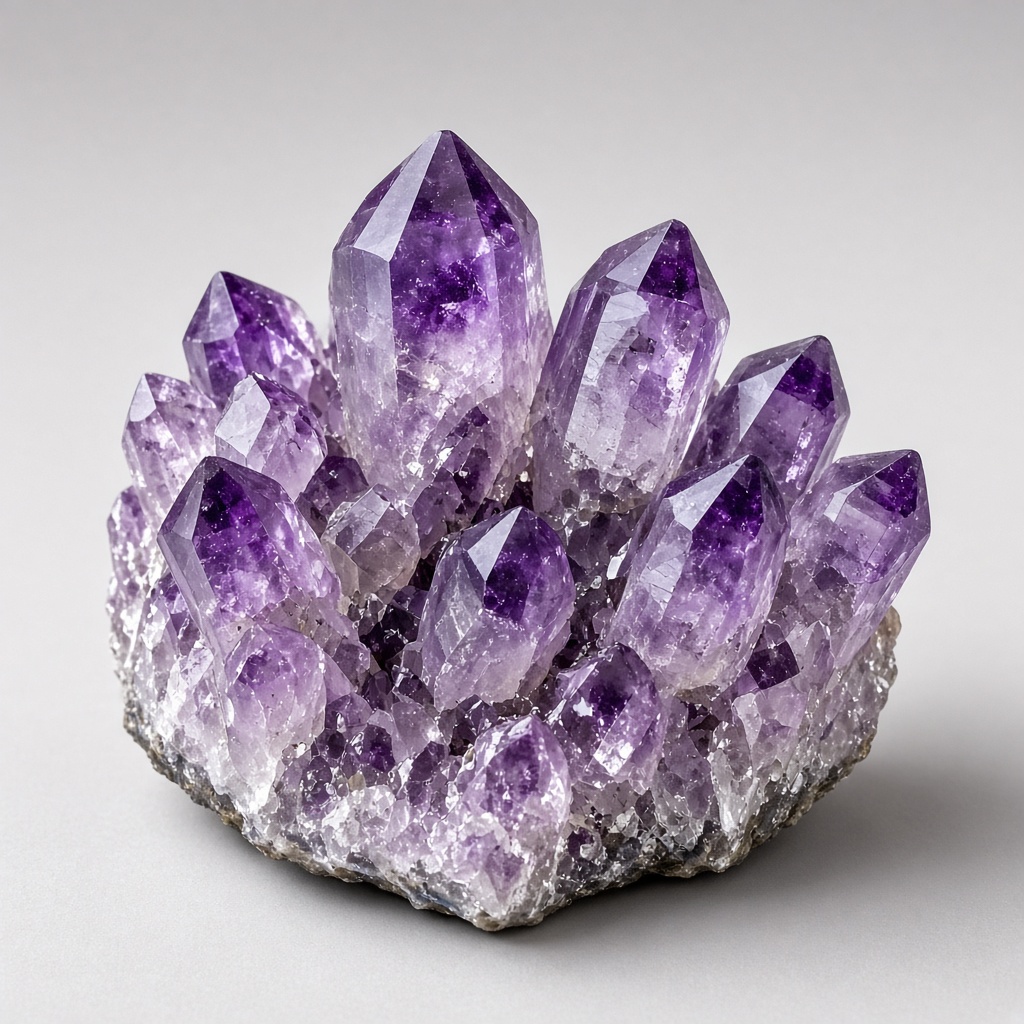
How to identify amethyst
Amethyst is a quartz problem that happens to be purple. How to identify amethyst is the same procedure as colorless quartz, plus a look at where the color sits. A point is a six-sided prism. A cluster is many points grown together. A geode is a dull shell lined with crystals. A tumbled stone has already lost the faces. Write the habit down before you accept a shop word such as generator, cathedral, or aura.
Hardness
Quartz is about 7, and amethyst does not get a discount for being purple. A steel nail should slide on a fresh face you can spare. Fluorite, often purple, is near 4 and the nail grooves it. Glass is nearer 5 to 5.5 and may show a seam or a bubble once you stop staring at the color. A sharp amethyst edge scratches ordinary window glass. Do not scratch a cut gem you cannot replace. Photograph the facet junction and keep the name tentative until a spare chip can take the nail.
Streak
On unglazed ceramic the streak is white or absent. A purple mark means dye, paint, or a soft coating came off. The mineral color of amethyst does not travel onto the tile as a pigment. If the only purple in the photo is a smear on the tile, you have not identified amethyst.
Acid
One drop of vinegar on a scratch. Amethyst does not fizz. Calcite does, and dyed calcite is a regular purple fake: soft, rhomb-shaped, and lively under the drop. Wipe the acid off. It will etch a carbonate you only meant to test. You do not need a stronger acid. Hardness and a quiet drop are enough to retire calcite.
Magnet
Amethyst is not magnetic. Test the stone away from a steel pin or a chain. A bead that itself jumps to a fridge magnet is not quartz, whatever the purple light in the shop did to the photo. Ignore product claims that call a magnetic purple bead amethyst.
Color should zone. Natural purple often deepens toward the tip or sits in bands you can follow through a broken base. Dye pools in cracks and may color a wet cloth. Heat that pushes purple toward yellow does not create a new mineral. It creates a citrine story on quartz. Aura films are metal on the surface of quartz, not a new species.
How it differs from lookalikes
| Lookalike | How to tell it from amethyst |
|---|---|
| Colorless or yellow quartz | Same hardness and fracture. The difference is color, not species. Heated amethyst is still quartz. |
| Fluorite | About hardness 4, often cubic. A steel nail scratches it and should slide on amethyst. |
| Glass | Bubbles, a mold seam, or soft facet edges. Amethyst crystals show sharp prism faces when they are not tumbled. |
| Dyed calcite | Hardness near 3, rhomb cleavage, and a vinegar fizz. Dye sits in cracks instead of crystal zones. |
Feldspar is the pale blocky mineral beside quartz in granite. It is not the purple lining of a geode. It cleaves near a right angle and sits closer to hardness 6. If your “amethyst” is a pink grain inside a speckled rock, you have left this page for a rock question.
When a photo gets it wrong
A geode photo that shows only tips hides the base, which is where zoning and glue both show up. A flat cut bottom with adhesive, or color that stops at a crack, is a constructed piece even when some of the points are real quartz. Ask for the underside of one crystal.
Tumbled chips in a wet bowl look darker than they are, and one dark chip names the lot. Dry a single stone. If a nail grooves it, that stone is not amethyst. The neighbors are still untested.
A yellow tip on a purple base is the heat pattern shops sell as citrine. Keep the quartz identification and treat the yellow as a treatment story. A lamp that saturates every violet object will make glass look like a gem. Shoot in open shade beside a white card, then hunt bubbles. The longer checklist for fakes is how to tell if amethyst is real. This page is the mineral itself. That page is the fake-versus-real argument. Use both when money is involved.
Conclusion
Identify amethyst only after the piece behaves as quartz: nail slides, streak is not purple, vinegar is quiet, magnet does nothing, and the purple zones through the crystal instead of pooling as dye. Soft purple that fizzes is calcite. Purple with bubbles or a seam is glass. Yellow from heat is still quartz.
Write the four results in one line before you rename the stone: nail, streak, vinegar, magnet. A pass on only the color is how dyed chips and purple glass stay in the collection. If the nail slides and the drop is quiet, you still check the crack for dye, because a real quartz body can wear a fake surface. If the nail grooves the stone, stop. Hardness has already beaten the purple, and more photos will not repair that. A second chip from the same cluster should get the same nail test, because one glued glass point can sit among real quartz.
Photograph a crystal base and a fresh edge, with a coin for scale. How to identify quartz is the procedure for the clear and milky pieces that never were purple. A brassy cube in the same box is pyrite, not a quartz variety. When the photo and the nail disagree, the crystal identifier keeps the candidates on the page where you uploaded.
Confirm with a photo
Upload a clear photo on IdentifyStone. The name stays on the same page with the traits that would keep or replace it.
Related entries
FAQ
- Is amethyst a different mineral from quartz?
- No. Amethyst is quartz with purple color. Identification should say quartz first, then the purple variety.
- Why is citrine yellow at the tip and purple at the base?
- That pattern often marks heated amethyst. The mineral remains quartz. The trade name is a color story, not a second species.
- Can tumbled amethyst still be identified?
- Form is gone, so hardness and a lack of dye in cracks do the work. A steel nail should not scratch it. Color alone is not enough.