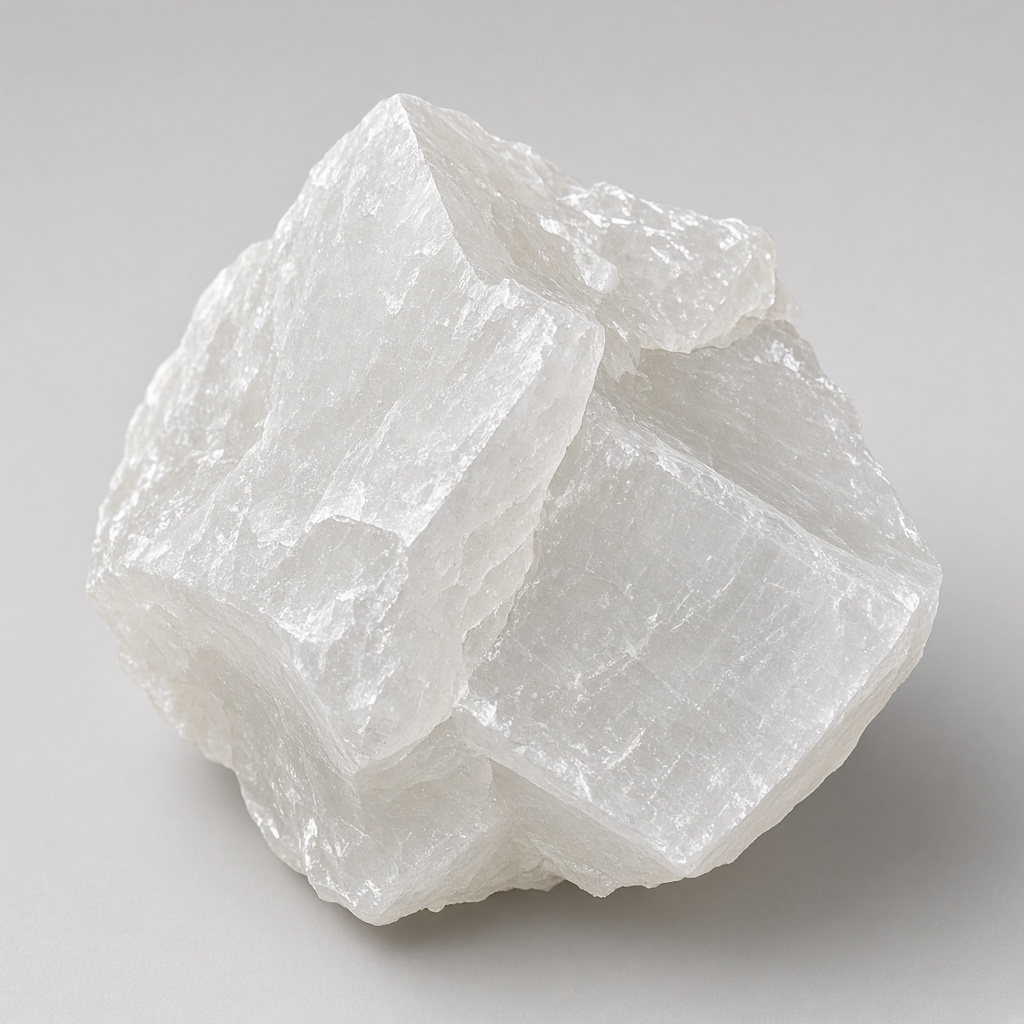
Properties
| Mineral | Calcite (CaCO₃) |
|---|---|
| Hardness | 3 on Mohs scale |
| Streak | White |
| Luster | Glassy to dull |
| Cleavage | Perfect rhombohedral (tilted boxes) |
| Acid test | Fizzes in household vinegar on a fresh scratch |
How to recognize calcite
Calcite is the mineral people confuse with quartz whenever the color is pale. Ignore the color for a moment. Look for cleavage: calcite prefers to break into tilted boxes you can stack in your mind like rhombs. Quartz breaks with a curved fracture and does not show that boxy habit. If the piece is a single crystal or a cleavage fragment, stay on the mineral path. If it is a dull limestone mass, the rock name may be the better answer.
Hardness is the kitchen test that settles most arguments. A copper coin is about 3.5 and should scratch calcite. A steel nail is far harder and will mark calcite easily. Quartz at 7 shrugs off the nail. Gypsum at 2 yields to a fingernail. Feldspar sits near 6 and also refuses vinegar. Scratch a corner you can spare, wipe the powder, and look for a groove rather than loose dust from dirt on the surface.
The vinegar test belongs to calcite and to limestone that is rich in it. Put a small drop on a fresh scratch. Bubbles mean carbonate. That is strong evidence for calcite as the mineral, or for a carbonate rock if the specimen is a grainy mass. Do not flood a display piece. Acid eats the surface you hoped to keep.
Streak on unglazed ceramic is usually white for calcite and does not separate it from many pale minerals. Use streak as a supporting note, not as the decider. Density in the hand is ordinary; calcite does not feel as heavy as pyrite for its size. Photograph a cleavage face filling the frame, and photograph any twinning or clarity that shows double images through a clear rhomb. When two names still fit after hardness, run the acid drop. When acid and hardness disagree with a quartz label, trust the tests over the photo color.
How it differs from lookalikes
| Lookalike | How to tell them apart |
|---|---|
| Quartz | Quartz is hardness 7 and does not fizz. A copper coin scratches calcite; it should not scratch quartz. |
| Gypsum / selenite | Gypsum is hardness 2. A fingernail scratches gypsum easily. Calcite needs something nearer a copper coin. |
| Feldspar | Feldspar is about hardness 6 with two cleavages near a right angle. It does not fizz in vinegar. |
| Limestone (rock) | Limestone is a rock made largely of calcite grains. If you see one crystal with rhomb faces, name calcite; if it is a dull mass of grains, name the rock. |
Confirm with a photo
Upload a clear photo on IdentifyStone. The name stays on the same page with the traits that would keep or replace it.
Related entries
FAQ
- Will vinegar damage calcite?
- Yes. Vinegar dissolves calcite. Use a tiny drop on a corner you can spare, wipe it off, and never soak a specimen you want to keep.
- Why does clear calcite look like quartz?
- Both can be pale and glassy. Hardness and acid split them. Quartz resists a nail and does not fizz. Calcite fails both of those quartz tests.
- Is Iceland spar a different mineral?
- Iceland spar is a clear variety of calcite known for double refraction. The mineral name is still calcite.