Field checks
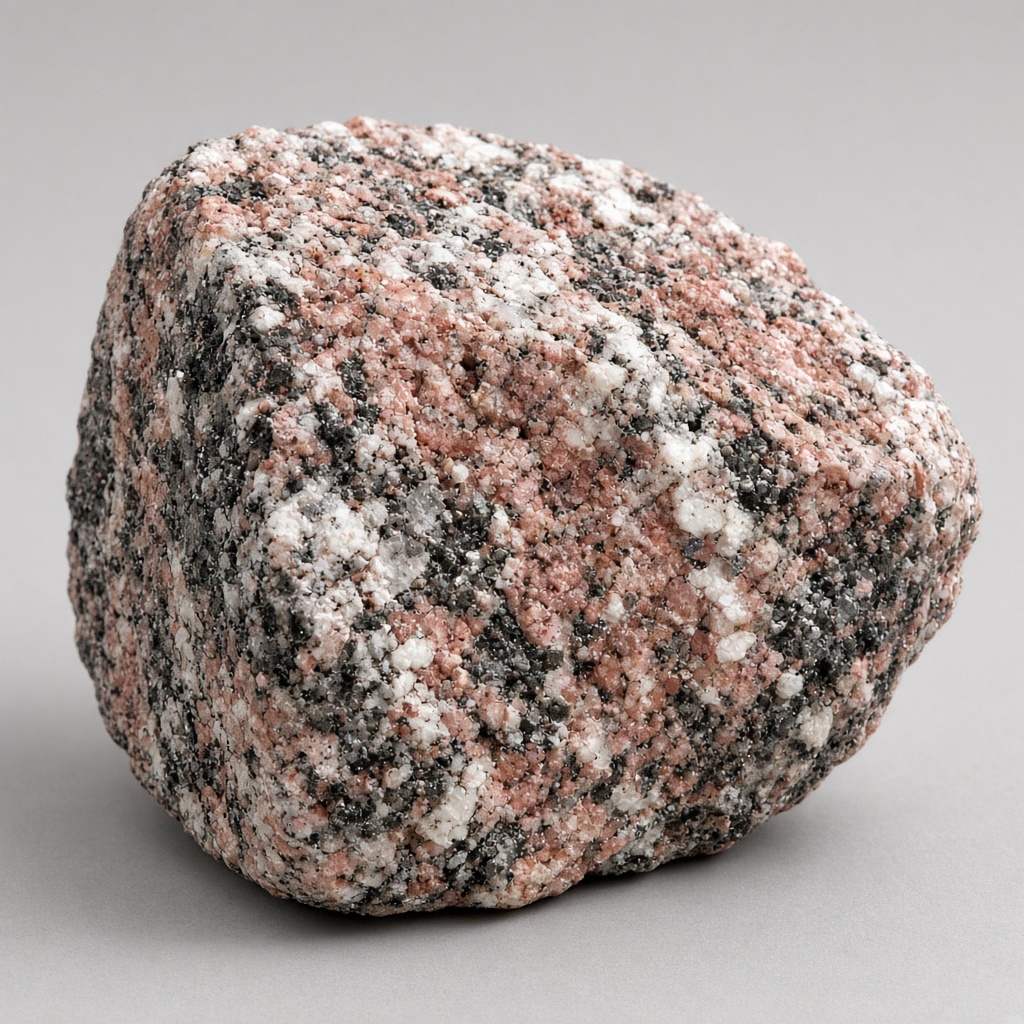
Look at a broken face in daylight, not the polished skin of a countertop and not a wet river cobble. Grain size is the whole argument. Granite grew slowly underground, so the minerals are large enough to point at. Basalt cooled at the surface, so the crystals are a dark paste unless a lens pulls a few larger ones out of the groundmass.
Hardness
Both rocks are tough. A steel nail is a poor separator. What the nail can do is find quartz inside granite. Glassy gray grains that the nail will not scratch are quartz, and quartz in a coarse intergrowth with pale feldspar is the granite checklist. Basalt does not offer those glassy grains to the naked eye. If every attempt to find a hard glassy grain fails and the rock is a uniform dark gray or black at arm’s length, lean basalt. If the nail powders the whole rock easily, you may be holding something softer than either, and you should not force this pair.
Streak
A solid rock rarely gives a clean streak the way a metal mineral does. Rubbing granite on tile mostly whitish-scratches the tile. Basalt may leave a dark gray smear if you can powder a corner, and often you cannot. Treat streak as a note, not a verdict. A brown streak from a rusty crust is iron oxide on the outside, not the identity of the fresh rock. Chip past the rind. If you need a streak that actually decides a name, you are probably looking at a metallic mineral such as pyrite, not at this rock pair.
Acid
Vinegar is here to throw out the impostor. Neither granite nor basalt fizzes. A dark rock that foams under a drop is likely limestone or a carbonate cement, and the basalt name is wrong even when the color photo looks volcanic. A light rock that foams is not granite. One drop, a fresh scratch, then wipe it. Do not bathe a sample. Acid will not choose granite over basalt when both stay quiet, which is the usual result. It only saves you from a carbonate wearing a dark or speckled disguise.
Magnet
Basalt commonly carries fine magnetite. A fridge magnet may refuse to stick, so do not stop at that miss. Hang the magnet on a thread, or watch a compass held just above a fresh face. A clear deflection supports basalt or another iron-rich volcanic rock. Granite usually leaves the needle quiet. A piece that jumps hard onto the magnet is richer in iron oxide than typical basalt and should not be forced into the granite box either. Test away from belt buckles and steel hammers.
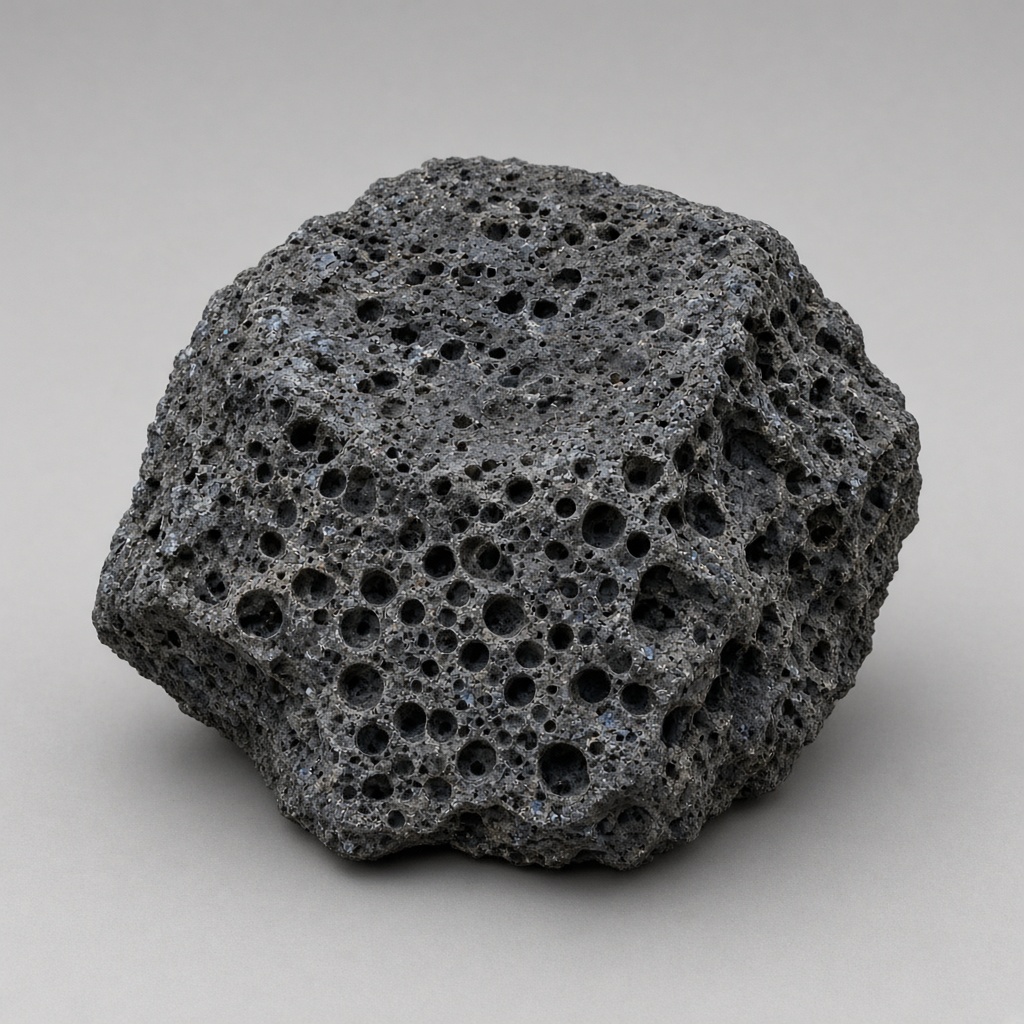
Weight is the extra you feel after a few samples. Basalt is dense for its size. Granite feels ordinary by comparison. Until you have held both, do not overrule visible quartz grains because the cobble “felt heavy.” Holes change the feel: vesicular basalt is full of gas pockets and can feel light even though the rock between the holes is dense. Those holes are stretched or irregular, not the round bubbles of slag glass.
How they differ
| Check | Granite | Basalt |
|---|---|---|
| Grains | Coarse. You can point to quartz, feldspar, and often mica. | Fine. The fresh face looks dark and even, with few grains to name. |
| Color | Pink, white, gray, with black flecks. | Dark gray to black. A light granite color is already a warning. |
| Quartz | Glassy grains a nail does not scratch. | No visible quartz. If you see it, rethink the name. |
| Vinegar | No fizz. | No fizz. Foam means a carbonate, not basalt. |
| Magnet or compass | Usually still. | Often a weak deflection from magnetite. |
| Gas holes | Not a vesicular lava. | Common in the upper part of a flow. Holes are irregular. |
When a photo gets it wrong
Wet cobbles are the first miss. Water turns granite dark and turns basalt into a mirror, so a speckled rock and a fine rock look like one black stone. Dry the face. If pink and glassy grains return as it dries, it was granite the whole time. If it stays a featureless dark chip, stay with basalt.
The second miss is a polished slab sold as black granite. Polish hides grain boundaries and the photo is a single reflection. You need a chipped edge or a raw side. Many “black granites” are gabbro, basalt, or another dark rock with no quartz. The label is a product name. The chip is the evidence.
The third miss is a phone crop so tight that one feldspar crystal fills the frame. A single mineral photo cannot be granite, because granite is a mixture, and it cannot be basalt, because you can see the crystal. Pull back until several grains show, or until you can see that no grains show. A pale blocky crystal by itself belongs on the feldspar tests, and a glassy crystal belongs on how to identify quartz.
The fourth miss is vesicular lava photographed as slag, or slag photographed as basalt. Round bubbles in transparent glass, especially with a magnet stuck to the chip, are the slag problem in obsidian vs slag glass. Irregular holes in an opaque dark rock, with a compass twitch and no brick, stay with basalt.
Conclusion
Keep granite when the face is a coarse mix and you can find glassy quartz plus pale feldspar. Keep basalt when the fresh face is dark and fine, quartz grains are absent, vinegar is quiet, and a compass or hanging magnet notices the rock. A fizz retires both names. A nail that finds quartz inside a speckled mix retires basalt.
Photograph the dry broken face with a coin so grain size is obvious, then a second frame if you are claiming gas holes. Those two frames are what a later look needs. The rock and stone identifier can take that photo on the same page. If the “grain” is actually one crystal, stop and identify the mineral before you force a rock name.
Confirm with a photo
Upload a clear photo on IdentifyStone. The name stays on the same page with the traits that would keep or replace it.
Related entries
FAQ
- Is black granite actually basalt?
- Often the countertop name is wrong. A coarse mix with glassy quartz is granite. A dark fine rock with no visible quartz is closer to basalt or gabbro. The trade name does not settle it.
- Will vinegar fizz on basalt?
- No. A lively fizz means carbonate, such as limestone, not basalt. Wipe the drop and rename the rock.
- Does a magnet stick to basalt?
- A fridge magnet often does not hang from basalt, but a swinging magnet or a compass can deflect because of fine magnetite. Granite usually does neither.